
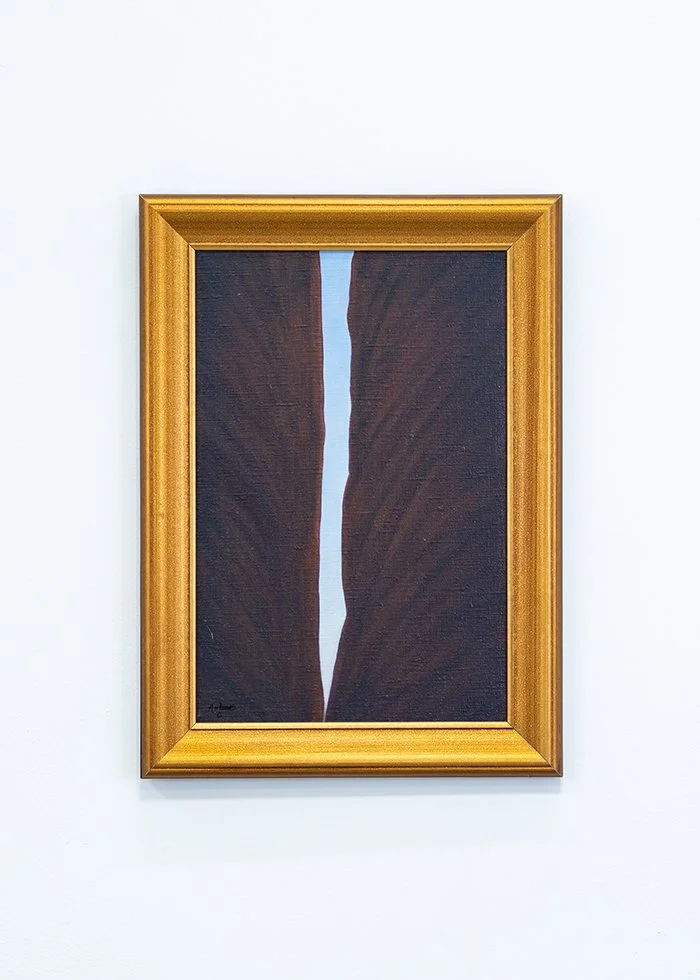
Canyon Walls
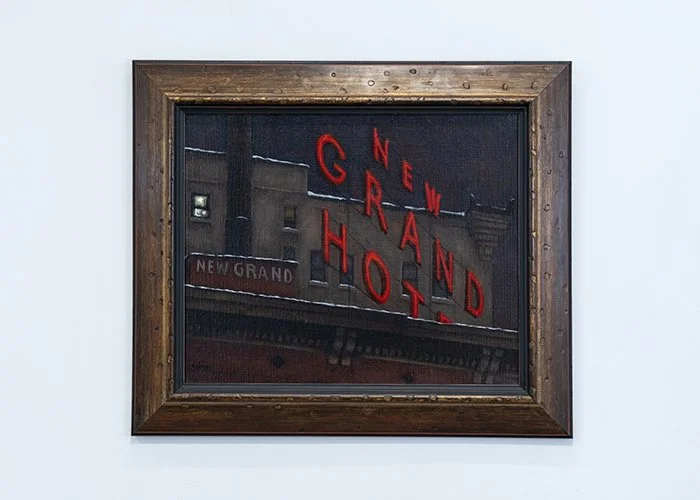
New Grand Hotel, Oil on linen, 23 x 27 inches, 2010
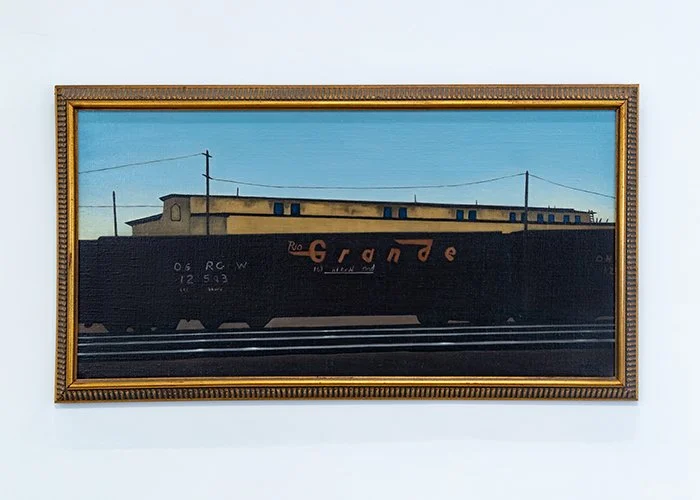
Rio Grande Train Car, Oil on linen, 16.5 x 30 inches, 2004
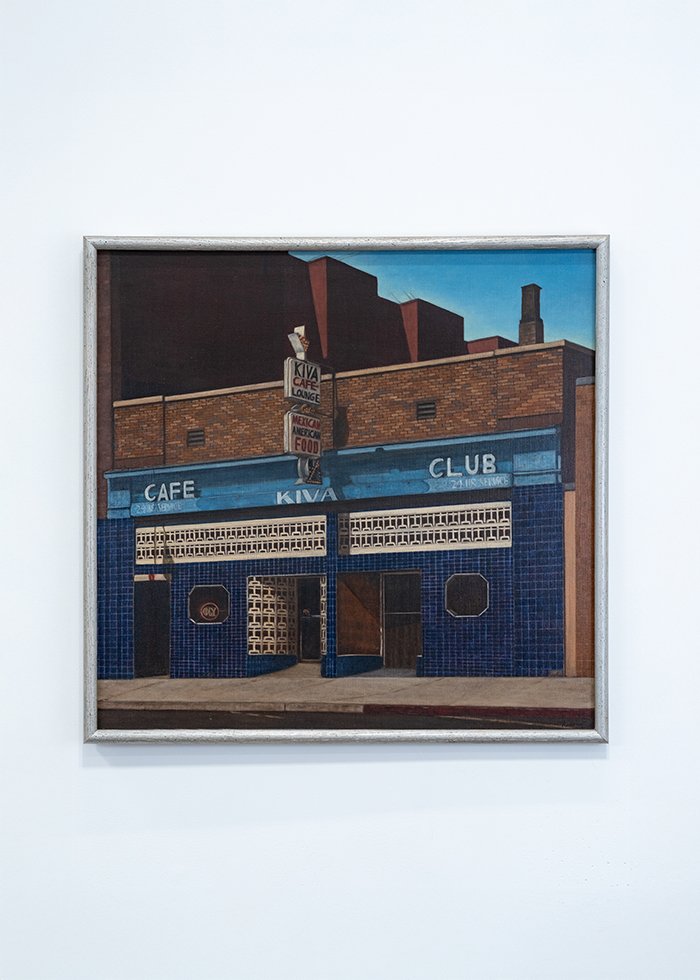
Kiva Cafe, Oil on linen, 28 x 29 inches, 1974
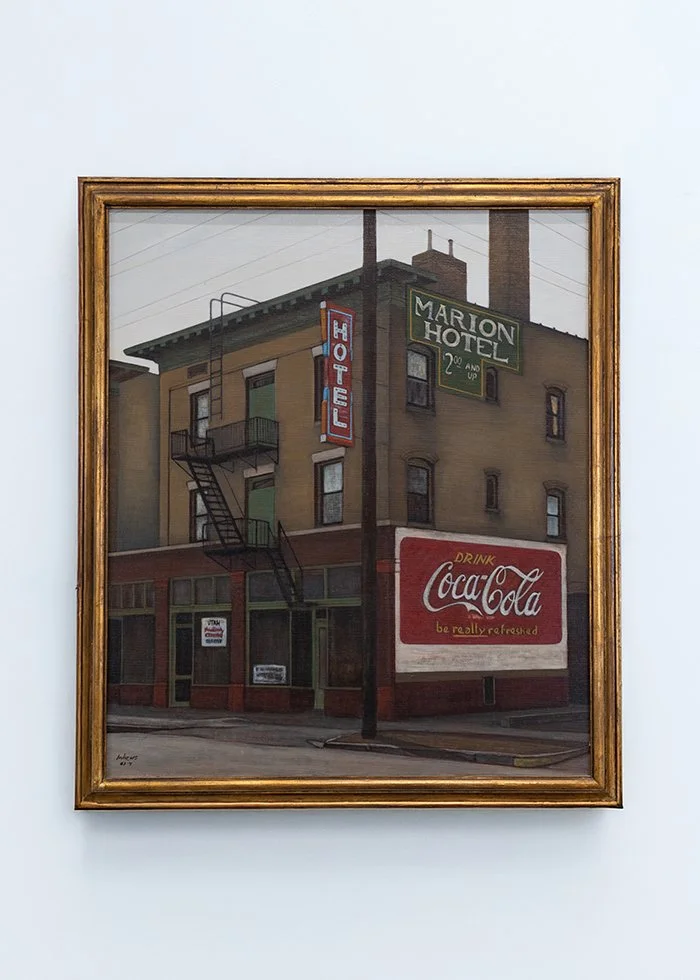
Marion Hotel, Oil on linen, 23 x 27 inches, 1983-84
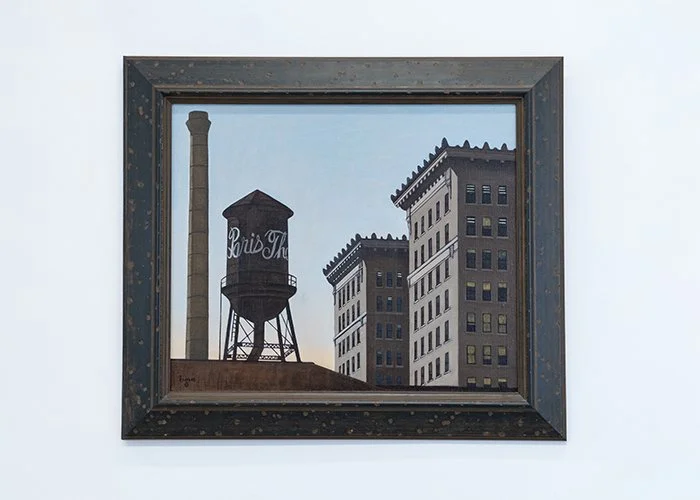
The Paris, Oil on linen, 20 x 24 inches, year unknown
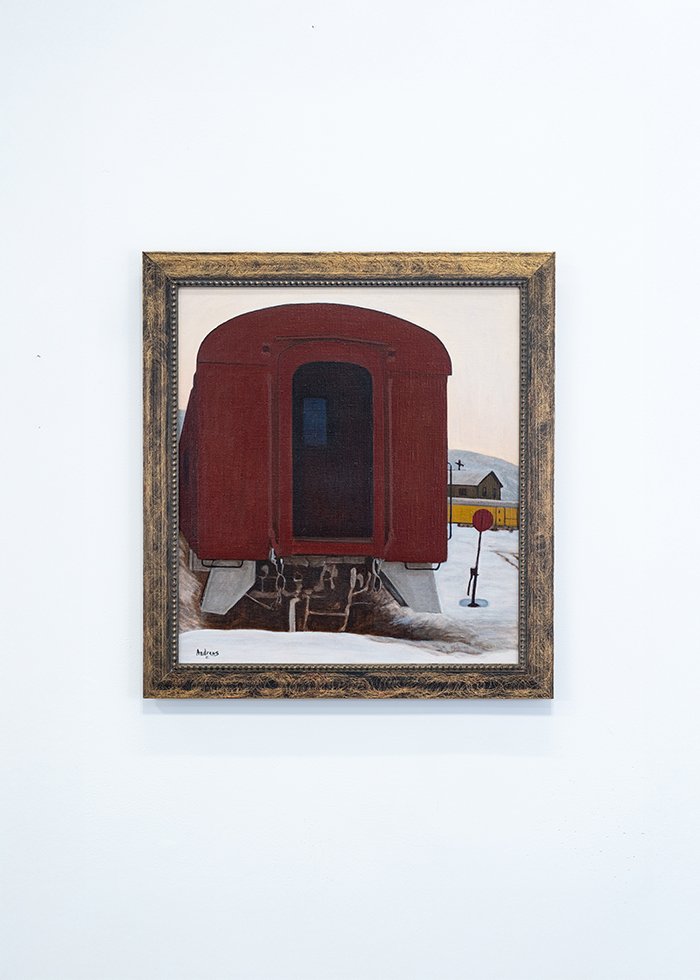
Marooned, Oil on linen, 23 x 21.25 inches, 2002
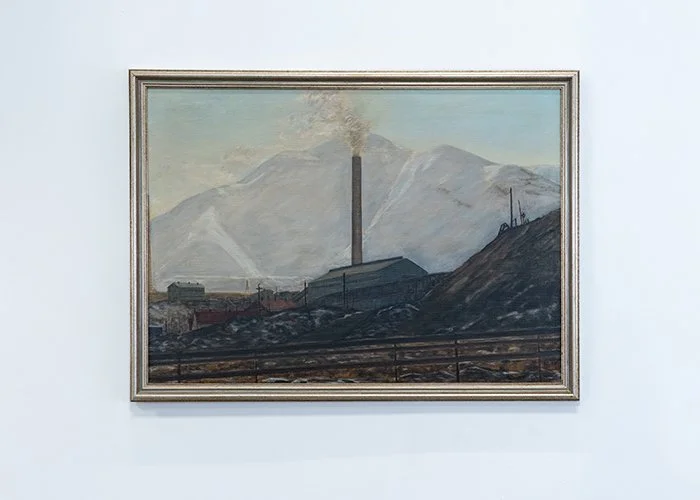
Smoke Stack
Karen Andrews
-
Working from photographs she took in situ across Utah and New York City; Andrew’s paintings initially present a sense of photographic immediacy. At first glance, the works appear realistic—sometimes even cinematic—yet this apparent fidelity gives way to a more complex spatial and emotional register. A palpable sense of distance and quiet pervades each composition, situating the viewer within an image that feels both familiar and deliberately staged.
Andrew’s depictions are highly constructed and resolutely still. Suspended in time and absent of human presence, they function less as documents than as mediated spaces—images that guide the viewer’s gaze much like a theatrical set or backdrop. The resulting tension suggests landscapes and architectural forms held in isolation, removed from their broader contexts and preserved through acts of selection and framing. As the environments Andrew depicts continue to evolve and disappear, her paintings operate as a visual archive—a retrospective lens onto places that now exist primarily as memory.
Alli Harbertson, guest curator and collaborator
-
A Utah native and largely self-taught artist, Andrews developed her practice through close study of painters such as LaConte Stewart, Georgia O’Keeffe, and Guy Wiggins, as well as artists associated with the early-20th-century Old Lyme Art Colony. Drawn to architectural subjects and the subtle seams between the natural and the built environment, Andrews explored ideas of place, perception, and the power of viewership. Her paintings evoke an atmosphere of quiet estrangement—spaces that feel familiar yet curiously removed.
Active in Utah’s art community during the 1970s and 1980s, Andrews exhibited locally before withdrawing from public exhibition for decades, continuing to paint largely for herself. Though technically trained by Earl Jones, her work departs from traditional Utah landscape painting through its urban subject matter, darker palette, and restrained, melancholic mood. In contrast to contemporaries such as Jeanne Leighton Lundberg Clarke and Edie Roberson—whose work embraced maximalism, humor, and visual energy—Andrews’ paintings are marked by stillness, spaciousness, and emotional restraint. Her uninhabited scenes recall the metaphysical quiet of Giorgio de Chirico and the atmospheric stillness of Edward Hopper, though notably absent of figures. Through absence, Andrews offers solitude not as emptiness, but as a deliberate and expressive presence.
Andrews lived a deeply private life and showed little interest in selling or publicly circulating her work. Her practice raises broader questions about visibility, authorship, and reception: What does it mean to share one’s work with others? Does art gain new meaning or value through public encounter, exhibition, and collection? Andrews rarely titled her paintings and spoke little about her motivations beyond a disciplined commitment to painting as a daily practice. In this way, Into the Light of Day invites viewers to consider how meaning emerges not only from an artist’s intent, but through the act of looking itself.
-
The Art of Artist Restoration: Karen Andrews Comes Out of Hiding, 15 Bytes, June 1, 2003